Eben Bayer grew up in a world surrounded by the natural rhythms of upstate New York, where the forests and farms near his childhood home sparked an early fascination with how living systems could solve everyday problems. From a young age, he tinkered with ideas that bridged biology and engineering, often spending hours observing mushrooms sprouting from fallen logs or watching how fungi intertwined roots to create resilient networks underground. This curiosity led him to Rensselaer Polytechnic Institute, where he pursued a degree in architecture, but it was during his senior year that a pivotal project ignited the spark for his lifelong pursuit. Assigned to design a structure using renewable resources, Bayer stumbled upon mycelium, the root-like structure of mushrooms, and realized its potential as a lightweight yet strong building material. What started as a class assignment evolved into something far greater, as he experimented with growing mycelium in molds filled with agricultural waste like corn husks and wood chips, binding them together into solid forms without the need for energy-intensive processes.

This discovery wasn’t just academic; it addressed a pressing global challenge of reducing reliance on petroleum-based foams that pollute environments and deplete non-renewable resources. Bayer’s roommate, Gavin McIntyre, shared his enthusiasm, and together they co-founded Ecovative Design in 2007, right after graduation, with little more than a garage setup and a belief that nature held the answers to human-made messes. Their first breakthrough came with MycoComposite, a material that could be grown in days and then baked to halt growth, resulting in a biodegradable alternative to Styrofoam. This innovation caught the eye of forward-thinking companies, and soon Ecovative was partnering with Dell to create packaging that dissolved harmlessly in soil, reducing waste in the electronics supply chain. Bayer’s vision extended beyond packaging; he saw mycelium as a versatile medium for furniture, insulation, and even leather substitutes, all while sequestering carbon and repurposing waste streams that would otherwise end up in landfills. His approach emphasized collaboration with nature rather than domination, drawing from the intricate ways fungi recycle nutrients in ecosystems to inform scalable production methods.
The material’s fire resistance, insulation properties, and acoustic absorption made it ideal for automotive parts and building panels, influencing architects to rethink sustainable construction. Bayer’s commitment to open-source principles further amplified his impact, as he shared patents and processes to encourage widespread adoption, fostering a community of innovators who built upon his foundational work. This generosity stemmed from a deep-seated conviction that collective progress would accelerate solutions to environmental degradation. As Ecovative grew, Bayer navigated challenges like scaling production without compromising quality, often iterating on strains of fungi to optimize growth rates and material strength. His leadership style, rooted in empathy and scientific rigor, inspired a team that now spans multiple continents, proving that one person’s insight could ripple outward to transform industries. Through it all, Bayer remained grounded in the lab, personally overseeing experiments that pushed the boundaries of what mycelium could achieve, from leather-like ForMyco used in fashion to structural composites for aerospace. This relentless pursuit not only elevated Ecovative’s profile but also positioned Bayer as a thought leader in biomaterials, speaking at conferences where he detailed how mimicking nature’s efficiency could cut emissions and create jobs in green manufacturing. The positive ripple effects extended to farmers, as Ecovative sourced substrates from agricultural byproducts, turning potential waste into economic value and supporting rural economies. Bayer’s work challenged the status quo of synthetic materials, demonstrating that innovation born from biological observation could yield products that were both high-performing and harmonious with the earth. His story underscores the power of interdisciplinary thinking, blending architecture, mycology, and entrepreneurship to forge paths where none existed before, ultimately contributing to a more sustainable world one mycelium brick at a time.
Bayer’s formative years laid the groundwork for a career defined by harmonious integration of science and ecology.
The expansion of Ecovative under Bayer’s guidance marked a turning point, as the company diversified its applications and forged partnerships that embedded mycelium technology into mainstream markets, from consumer goods to industrial uses, all while prioritizing ethical production and minimal environmental footprint. One of the most notable advancements came with the development of MycoWorks, a spin-off focused on mycelium leather that promised to disrupt the fashion industry by offering a cruelty-free, low-water alternative to animal hides and synthetic leathers. Bayer’s expertise in fungal biology allowed him to fine-tune the growth process, creating sheets of material with textures and durability comparable to traditional options, yet fully compostable at the end of their lifecycle. This innovation attracted collaborations with luxury brands like Hermes and Adidas, who integrated the material into products ranging from handbags to sneakers, thereby influencing consumer choices toward more responsible consumption. The positive influence spread to the automotive sector, where Ecovative’s composites replaced petroleum foams in car interiors, reducing vehicle weight and improving fuel efficiency, which in turn lowered carbon emissions across millions of miles driven annually. Bayer’s strategic foresight ensured that these materials met stringent industry standards for safety and performance, earning certifications that built trust among manufacturers hesitant about novel substances. Beyond products, his work has inspired educational initiatives, with Ecovative offering workshops and open-access resources that teach students and entrepreneurs how to cultivate mycelium at home, democratizing access to sustainable design tools. This educational outreach has sparked a new generation of bioengineers, many of whom credit Bayer’s transparent approach for their entry into the field, creating a virtuous cycle of knowledge dissemination and innovation. Economically, Ecovative’s model has generated thousands of jobs in mycology research, material production, and supply chain management, particularly in regions with abundant agricultural waste, fostering local resilience and reducing dependency on imported synthetics. Bayer’s emphasis on circular economies shines through in how the company recycles its own production scraps back into the growth medium, minimizing waste from the outset and setting a benchmark for zero-waste manufacturing. His influence reached global policy discussions, where mycelium-based solutions were highlighted as viable paths to achieving sustainability goals, encouraging governments to invest in biotech incentives. Through patents that protect core processes while licensing them affordably, Bayer ensured broad adoption, from small-scale artisans crafting eco-furniture to large corporations overhauling packaging lines. The material’s ability to grow in vertical farms addressed urban space constraints, allowing production near consumption hubs and slashing transportation emissions. Bayer’s personal involvement in strain selection and process optimization kept Ecovative at the forefront, as he explored hybrid materials that combined mycelium with recycled plastics for enhanced properties without perpetuating fossil fuel use. This adaptability has influenced supply chain redesigns worldwide, with companies adopting Bayer’s principles to create more resilient, eco-conscious operations. His contributions extend to disaster relief, where lightweight, insulating mycelium panels provide quick-deploy shelters that biodegrade after use, aiding recovery efforts without adding to debris. By 2020, Ecovative’s technologies had diverted billions of pounds of plastic waste equivalents, a testament to Bayer’s vision of scaling biological solutions to match industrial demands. The ripple effects on biodiversity are profound, as widespread use reduces pollution in oceans and soils, allowing ecosystems to recover and thrive. Bayer’s expertise has also permeated academia, with research papers citing his methods as foundational for advances in fungal engineering, bridging gaps between lab discoveries and real-world applications. In essence, his work at Ecovative has not only elevated biomaterials but also redefined success in innovation as measured by positive planetary outcomes, inspiring a shift toward regenerative design across sectors.
Eben Bayer’s innovations have reshaped the biomaterials landscape by introducing mycelium as a cornerstone of sustainable manufacturing, prompting industries to reevaluate their material choices in favor of biologically derived options that align with long-term environmental stewardship.
The packaging sector, long dominated by non-degradable plastics, underwent a significant shift thanks to Bayer’s MycoComposite, which offered a direct replacement that grew from waste and broke down naturally, influencing companies to adopt circular practices that reduced landfill contributions and conserved resources. This transition not only cut costs associated with waste disposal but also enhanced brand reputations among eco-aware consumers, creating a market incentive for further investment in bio-based alternatives. Bayer’s approach to material science emphasized functionality alongside sustainability, ensuring that mycelium products matched or exceeded the performance of conventional materials in terms of shock absorption and thermal stability, which alleviated adoption barriers for hesitant manufacturers.
Furthermore, the construction industry benefited immensely from Bayer’s development of mycelium insulation and structural elements, which provided superior thermal regulation and fire resistance without the volatile organic compounds found in traditional foams. Architects and builders, inspired by Ecovative’s prototypes, began incorporating these materials into green building projects, leading to certifications like LEED that rewarded such choices with higher valuations and occupancy rates. This influence extended to urban planning, where mycelium’s lightweight nature facilitated modular construction techniques, speeding up development in densely populated areas while minimizing the carbon footprint of cement and steel production. Bayer’s expertise in optimizing fungal growth for specific applications allowed for customized solutions, such as acoustic panels that improved indoor environments in schools and offices, contributing to better human well-being through quieter, healthier spaces.
In the realm of consumer products, Bayer’s work with mycelium leather through MycoWorks revolutionized fashion and accessories, offering a premium, vegan option that required far less water and land than animal leather, thus alleviating pressures on agricultural systems and promoting ethical sourcing. Luxury houses and sportswear giants adopted these materials, driving a trend toward sustainable luxury that educated consumers on the viability of biofabrics and spurred demand for similar innovations. The positive economic impact was evident in job creation within the biotech supply chain, from fungal cultivators to designers skilled in bio-materials, fostering specialized workforce development that rippled through local communities.
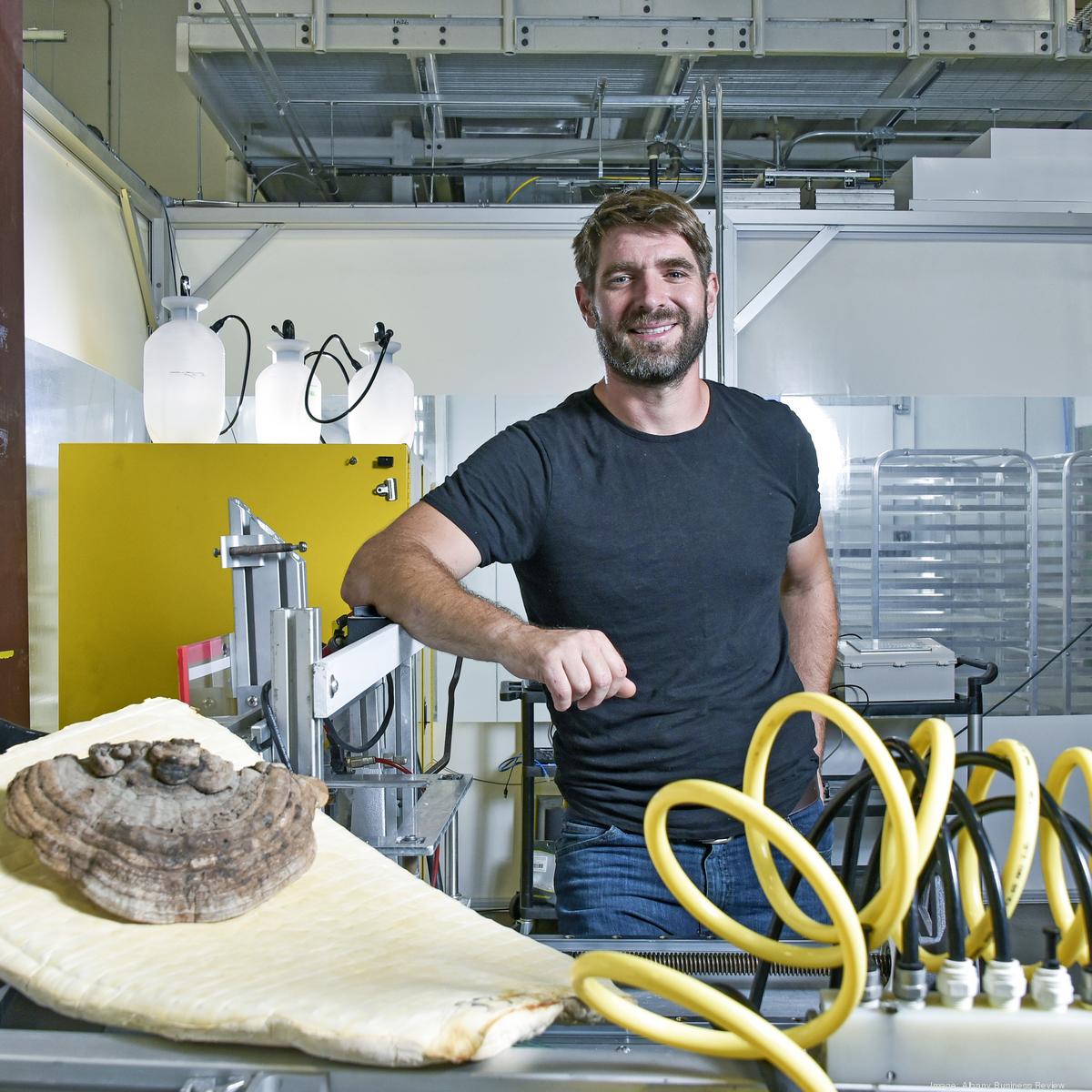
Bayer’s contributions have elevated the conversation around biofabrication on an international stage, positioning mycelium as a key player in addressing climate challenges through scalable, nature-aligned technologies. Collaborations with global entities have amplified the reach of his work. Policy frameworks have increasingly incorporated mycelium solutions. Research advancements continue to build on his foundational patents.
Ecovative’s international expansions have localized production in various countries, adapting to regional waste streams and creating tailored applications that support diverse economies while promoting global sustainability standards. Bayer’s advocacy for biotech in forums like the United Nations has influenced international agreements on plastic reduction, highlighting mycelium as a practical tool for compliance and innovation. His mentorship programs and open-source contributions have empowered startups worldwide to develop mycelium variants for local needs, from biodegradable mulch in agriculture to protective gear in manufacturing, ensuring that the benefits of his expertise are accessible across borders. This global dissemination has led to measurable reductions in plastic pollution, with studies showing decreased microplastic levels in waterways near adopting regions, a direct outcome of widespread material substitution. Bayer’s vision of a mycelium economy has inspired investment surges in fungal research, funding explorations into new applications like medical scaffolds and water filtration media, expanding the positive impacts far beyond initial expectations. Through strategic partnerships, his technologies have integrated into renewable energy projects, such as insulating wind turbine bases with mycelium composites that enhance efficiency and longevity. The educational legacy persists as universities adopt Ecovative’s curricula, training the next cohort of scientists in bio-inspired design, ensuring sustained progress. Economically, the shift to mycelium has boosted GDP in bioeconomy sectors, with projections indicating trillions in value from such innovations over the coming decades. Bayer’s personal commitment to continuous improvement, evident in ongoing R&D at Ecovative, keeps the momentum alive, as recent developments include mycelium-based batteries and sensors that push the envelope of smart materials. His influence on corporate responsibility is profound, with sustainability reports now frequently citing mycelium as a benchmark for green innovation, encouraging a race among competitors to match Ecovative’s standards. Community initiatives, such as urban farming kits using mycelium substrates, have empowered grassroots efforts in food security and waste management, particularly in developing areas. The holistic approach Bayer championed—integrating biology, design, and ethics—has redefined expertise in materials science, making it synonymous with positive world change. As industries evolve, his work stands as a beacon, illustrating how one innovator’s dedication to nature’s wisdom can foster a more resilient, harmonious global fabric, where human progress and ecological health advance hand in hand.